
Thursday, April 3, 2014
Conclusion to The Giver by Lois Lowry
After completing The Giver by Lois Lowry and can officially say "This book is weird!" The book concludes with Jonas running away to go "Elsewhere" bringing Gabriel and food, riding away on his father's bicycle. As they run away they dodge being seen by search planes and travel a long time until heavy snow makes riding his bike impossible. They finally find a sled at the top of a hill and Jonas an Gabriel experience the thrill of a downhill sled ride. Again, I can officially say "This book is weird!" I have never read a book like this and I really am having a hard time explaining just how odd this book made me feel. To have a book end by the main character experiencing the thrill of a sled ride, is truly odd and not particularly satisfying, but makes this book really stick out in my mind. One really cool thing about this book is it shows Jonas truly cherishing the most simplistic of concepts. In chapter 20 it says, "He heard people singing. Behind him, across vast distances of space and time, from the place he had left, he though he heard music too." This quote shows hearing music as such an odd concept, which allows the reader to compare his or her life where music is very common to a life where simply hearing music is a new experience. This book was one of a kind and I doubt I will ever read book similar to The Giver.


Tuesday, April 1, 2014
Midway Review of The Giver by Lois Lowry
The Giver by Lois Lowry is told from the point of view of Jonas, an eleven year old boy living in a futuristic society that has gotten rid of pain, fear, war, and hatred. In this society no one makes judgments due to everyone looking and acting basically the same. Also, there is very little competition and everyone is extremely polite. The society also eliminated choice of occupation; at the age of twelve every child is assigned a job based on his or her abilities and interests. Citizens apply to be assigned with a spouse, and each couple is assigned two children each. I could probably go on and on about all the different aspects that make up this extremely odd society. So far I am really enjoying this book almost entirely because it is unique and odd. I am not used to a society where people walk around like robots and look exactly the same, so reading about one is as close as I could get to this situation. In addition, reading about a place like this really hooked me in because I wanted to learn more and better understand what this futuristic lifestyle is like. In chapter 13 Jonas says, "We really have to protect people from wrong choices." This quote sent chills throughout my body because it is something that would be completely outlawed in our society. Jonas is verbally agreeing that it is important for people to never make a bad choice, but in our lives today we understand that through our mistakes we can learn a lot. These kinds of odd differences are found throughout the book and they make the reader understand just how different the society depicted is from our current one.

Sunday, March 30, 2014
Introduction to The Giver by Lois Lowry
I first was introduced to The Giver in several years back when I listened to it on a tape and followed along. At the time I was no where near the reader I am today and I think that I probably missed a lot of the story due to not being able to comprehend as well. I find this happens very often, where I read a book at a young age and didn't quite get it, and often when I come back I can thoroughly enjoy the book from a more mature reading point of view. Also, the book was played on a tape which often leads me to fall behind because of my slower pace of reading and doesn't allow me to comprehend the book fully. I look forward to reading this book because I missed much of the story and couldn't tell you a thing about the plot having read it several years ago.

Saturday, March 29, 2014
Conclusion to A Wrinkle in Time by Madeleine L'Engle
A Wrinkle in Time is one of the few classics that I have read that I
really got hooked on. Although it started out a bit slow as the story neared
the climax I found myself having a hard time putting it down. The book really
focused on the idea of good versus bad and the ultimate triumph of love. To
start off there was a very clear distinction between good characters and bad
characters. The "good" characters include Meg, her family, Calvin, the
Mrs. W's, Aunt Beast, and the Happy Medium. The "evil" characters
include IT, The Dark Thing, and the Man with the Red Eyes. There was no
overlapping of these characters which made following character development much
easier, not the case in many other books. Also, the books central conflict is
clear and simple that allows readers to easily understand the plot, but isn't
too simple like the plot in a book I previously read during this reading
workshop (Travel Team). Personally, I prefer a book with a plot that is clear
and easy to understand but isn't too common and cliché. This combination makes
for a book that I can really can immersed in and enjoy thoroughly. Earlier in
this post I brought up the triumph of love in this story. This can be directly
seen when the text says, "Love. That was what she had that IT did not
have," (p. 207). This quote directly brings up that the good side,
including Meg, her family, and friends, were able to overcome evil due to
having the ability to love.


Wednesday, March 26, 2014
Midway Review for A Wrinkle in Time
A Wrinkle in Time is about a girl named Meg Murray, a high
school aged girl who's father has been missing for over a year. The story
starts with Mrs. Whatsit arriving at Meg's house on a stormy evening. Mrs.
Whatsit looks like an old lady but is actually a celestial creature that is
able to read the thoughts of others. Mrs. Whatsit introduces Meg to the
tesseract, a "wrinkle in space and time". Using the tesseract Meg, her
brother Charles Wallace, and friend Calvin O'Keefe are able to travel through
the fifth dimension in search of Meg's father. So far I have some what enjoyed
A Wrinkle in Time but it has been extremely hard for me to visualize the story.
Although the author uses effective description techniques some of the ideas
presented in the book seem outlandish, making it very hard to picture. Despite
this difficulty, I really think the plot is unique and is something that I am
extremely interested.
One of the main themes in this book is accepting how things are and not trying to comprehend everything. This can be seen in the text when the author says, "But you see, Meg, just because we don't understand doesn't mean that the explanation doesn't exist," (p. 46) I found that this theme was present throughout the book. Meg at first attempts to find out the explanation for everything that is unknown to her, but later on realizes that things like family and love are more important to her.

One of the main themes in this book is accepting how things are and not trying to comprehend everything. This can be seen in the text when the author says, "But you see, Meg, just because we don't understand doesn't mean that the explanation doesn't exist," (p. 46) I found that this theme was present throughout the book. Meg at first attempts to find out the explanation for everything that is unknown to her, but later on realizes that things like family and love are more important to her.

Monday, March 24, 2014
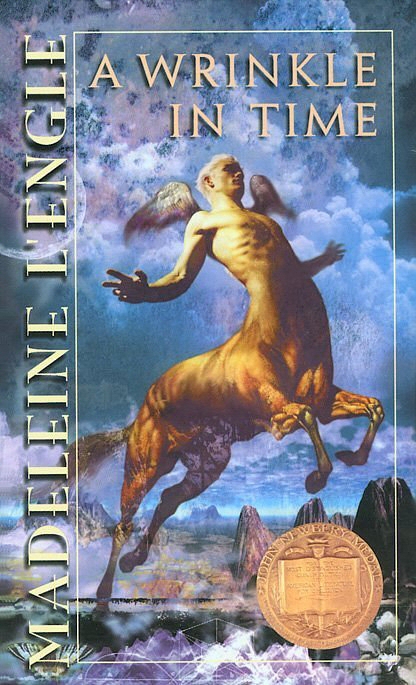
Introduction to A Wrinkle In Time by Madeleine L'Engle
A Wrinkle in Time was first recommended to me last year in a reading unit in which students read one classic book. I strayed away from this book at the time but have decided to read it because of several good reviews from some of my peers. One of the main things I can expect going into this book is language to vary in some ways. Due to it being a classic and being written in 1962, I can assume that the language used to write the book could be slightly different then what I am accustomed to. Based on information I have heard about the book, I predict the book will depict a young girls fight to find her missing father.

Saturday, March 22, 2014
Conclusion to Miracle at Merion by David Barrett
After finishing Miracle at Merion by David Barrett, I can say it is one of my favorite non-fiction books that I have ever read. Golf is my passion and something that I never get bored of, so being able to immerse myself in golf history through reading this book was truly enjoyable. Previous non-fiction sports books that I have read haven't especially impressed me mostly because of it all being based in factual information. This brings to mind a discussion we had in a reading workshop lesson about the crossover between fiction and non-fiction. In this book the author uses chronological order to tell the story of the 1950 U.S. Open and the events leading up to it. This is a technique very often found in fiction books that authors use to build suspense in their stories, but finding this in a non-fiction book is not so common. I enjoyed the use of this technique in a story like this, one that revolves around an event that only lasted a few days, so through using a chronological order build up it allows readers to feel the excitement of the tournament. Another aspect of this book that I really enjoyed is the way the author detailed the tournament as if he were doing a live television coverage of the tournament. For example the author says, "Here is how the leaders stood with nine holes remaining, passing through the ninth hole at various times: Hogan four over; Mangrum and Middlecoff six over; Harrison, Kirkwood, and Nary seven over; Fazio, Ferrier, and Palmer eight over; and Ransom nine over." (p. 241) This kind of description really sets the scene for readers to understand where the tournament stood. I would recommend this book to anyone who knows a decent bit about the game of golf, solely because the book uses phrases and concepts that would only make sense to people who understand the game of golf. All in all, this book about a historic golf tournament was truly fantastic.

Wednesday, March 19, 2014
Midway Review of Miracle at Merion by David Barrett
Miracle at Merion initially starts with a short introduction, depicting Ben Hogan standing over a putt
on the 72nd hole of the 1950 U.S. Open at Merion Golf Club.
Immediately after this, the book shifts all the way back to the 1948 U.S. Open.
From there the book pretty much stays in chronological order describing the
greatest players on the tour during this time and explaining the events of
tournaments leading up to the 1950 U.S. Open. About midway through the book Ben
Hogan gets in a head on car accident with a Greyhound bus, experiencing near
fatal injuries. The events after this accident are all about Hogan’s recovery
and comeback to the U.S. Open. I have enjoyed the book so far although it is occasionally
hard to follow due to the author going in depth into smaller, less significant
players on the tour at that time. In addition, the book can get slightly boring
at times when the author is discussing the events of a tournament at a course
in which I am unfamiliar. Despite this being a drawback to the book, when the
author discusses a course that I am extremely familiar with such as Augusta
National or Merion, the book becomes much more enjoyable.
“I stood on top of the steep hill over the 18th green
and watched Snead come in,” (73) This event takes place during the 1949 Masters
tournament and Hogan is the viewer of Snead playing the 18th at
Augusta National. Having been there for the 2012 Masters tournament, I can
visualize the beautiful 18th hole severely sloped from the tee box
up to the green. This quote is an example of a part of this book that I really
enjoy because it allows me to be immersed in the story and feel as though I am
there.

Sunday, March 16, 2014
Introduction to Miracle at Merion by David Barrett
Miracle at Merion by David Barrett is a book I was
introduced to by my dad. I visited Merion Golf Club last year for the 2013 U.S.
Open and was intrigued to learn about the history of U.S. Opens at Merion and
also about Ben Hogan’s life. Miracle at Merion is a non-fiction book about the
1950 U.S. Open at Merion. Based on my minimum amount of knowledge on the event,
I predict that the book will delve into the comeback story of Ben Hogan after a
near fatal car accident. I look forward to reading the book after visiting
Merion as it allows me to better visualize the golf course layout.

Saturday, March 15, 2014
Final Review for Travel Team by Mike Lupica
After completing Travel Team by Mike Lupica I can finally say "I'm done!". The story was decent and I can't say I wasn't rooting for Danny and his team but I did have to trudge through this one. Thankfully, the book came full circle starting with Danny getting cut from the travel team and ending with his new team beating the team that cut him. This was a satisfying ending and didn't leave me with any unanswered questions.
Now that I am completely done the book I can truly say that I was unimpressed by this book. The target audience was clearly middle school aged students, possibly the reason why the main character was only twelve years old. I was really hoping that Travel Team would live up to the standard that I used to classify other Lupica sports novels, and it completely failed to do so. The books plot seemed so simple and typical that I hard an extremely hard time getting immersed in the book because I knew exactly what was going to happen next. Based on my strong opinions toward this Lupica novel I have officially decided not to re-read any of his other books in hopes of preserving my respect towards them.
"The two of them shook hands the regular way. The old-school way. Then Ty kept holding on to Danny's hand and somehow lifted him up in the air in the same motion. Then Will was there, and Bren, putting Danny up on their shoulders, carrying him around the court, the way the old Vikings had carried his dad once," (274). This quote almost entirely sums up my feelings toward this book (I can't help but chuckle when reading this excerpt). The entire story followed a typical structure, Danny gets cut from the team, he creates another team, they win, the team carries Danny out on their shoulders, and they all live happily ever after! This plot line just did not draw me in and I'm going to focus on making sure my chosen books have a more complex story structure.

Now that I am completely done the book I can truly say that I was unimpressed by this book. The target audience was clearly middle school aged students, possibly the reason why the main character was only twelve years old. I was really hoping that Travel Team would live up to the standard that I used to classify other Lupica sports novels, and it completely failed to do so. The books plot seemed so simple and typical that I hard an extremely hard time getting immersed in the book because I knew exactly what was going to happen next. Based on my strong opinions toward this Lupica novel I have officially decided not to re-read any of his other books in hopes of preserving my respect towards them.
"The two of them shook hands the regular way. The old-school way. Then Ty kept holding on to Danny's hand and somehow lifted him up in the air in the same motion. Then Will was there, and Bren, putting Danny up on their shoulders, carrying him around the court, the way the old Vikings had carried his dad once," (274). This quote almost entirely sums up my feelings toward this book (I can't help but chuckle when reading this excerpt). The entire story followed a typical structure, Danny gets cut from the team, he creates another team, they win, the team carries Danny out on their shoulders, and they all live happily ever after! This plot line just did not draw me in and I'm going to focus on making sure my chosen books have a more complex story structure.
Thursday, March 13, 2014
Midway Review of Travel Team by Mike Lupica
The book Travel Team by Mike Lupica is about a twelve year old boy, Danny Walker, who lives in Middletown, New York. In the story Danny gets cut from the town travel basketball team because he is too short, despite him being one of the most talented players in the town. As a result, Danny's dad decides to coach his own travel team with Danny on it. At first it seems that the team has very little talent and most likely will not win a game, until Colby Danes, the best girl player in their league, and Ty Ross, the best boy player, joins the team. Ty Ross was originally on the team that cut Danny but quits to play with Danny.
In my reading thus far, I have to say that I am not overly impressed. Although I usually love the way Mike Lupica writes, it seems too cliche and stereotypical. The plot follows a path that is too familiar to me and becomes uneventful. Furthermore, the story is based in a very simple problem (getting cut from basketball team), something that has been done thousands of times in fiction novels. It is possible that my opinions of this book could be altered due to the long period of time since I last read a book from Mike Lupica. Over this time the books have become too basic and simple leading me to think that rather than this specific book not being written with the quality as previous books I have read, I have just grown out of Lupica's novels.
"He'd asked his dad if he wanted to come in after practice, but he said he had to be somewhere. At ten o'clock, Danny just assumed the somewhere had to be Runyon's bar," (100). This quote shows one of the minor problems in the story. Danny is trying to win the approval of his father, a former NBA player, while all his father wants to do is go to the bar and get a drink. This kind of conflict is found very often and doesn't leave readers wondering what is going to happen next.

In my reading thus far, I have to say that I am not overly impressed. Although I usually love the way Mike Lupica writes, it seems too cliche and stereotypical. The plot follows a path that is too familiar to me and becomes uneventful. Furthermore, the story is based in a very simple problem (getting cut from basketball team), something that has been done thousands of times in fiction novels. It is possible that my opinions of this book could be altered due to the long period of time since I last read a book from Mike Lupica. Over this time the books have become too basic and simple leading me to think that rather than this specific book not being written with the quality as previous books I have read, I have just grown out of Lupica's novels.
"He'd asked his dad if he wanted to come in after practice, but he said he had to be somewhere. At ten o'clock, Danny just assumed the somewhere had to be Runyon's bar," (100). This quote shows one of the minor problems in the story. Danny is trying to win the approval of his father, a former NBA player, while all his father wants to do is go to the bar and get a drink. This kind of conflict is found very often and doesn't leave readers wondering what is going to happen next.
Tuesday, March 11, 2014
Introduction to Travel Team by Mike Lupica
I chose to read Travel Team as my fiction read because I had previously read books from the author, Mike Lupica, and really enjoyed his style of sports fiction. Mike Lupica is a sports writer for the New York Daily News and is often seen on ESPN. Based on previous books of his that I have read, I think Lupica is very knowledgable about sports and does a great job depicting the action to the reader. The book Travel Team was recommended to me a few years ago in middle school and although I owned the book I never got around to reading it. I am looking forward to reading this book and am hoping that it lives up to Lupica's standard of writing.


Subscribe to:
Comments (Atom)